
How to Lose Weight Fast: 15 Science-Backed Tips That Work
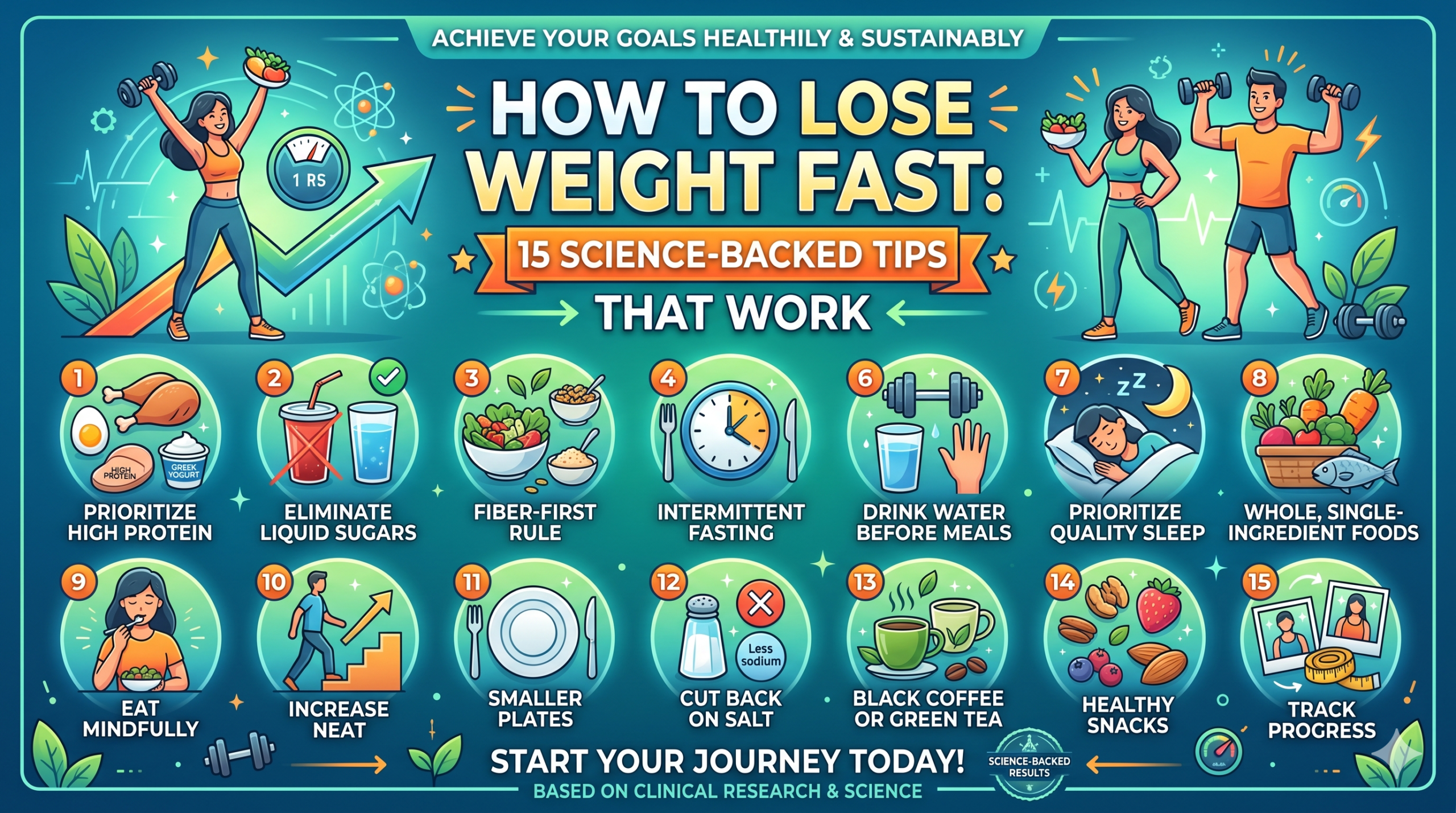
The search for the most effective way to lose weight fast is often cluttered with fad diets, “detox” teas, and unsustainable workout routines. However, the most successful weight loss journeys aren’t built on gimmicks—they are built on physiological principles.
If you are looking to shed pounds quickly while maintaining your energy and muscle mass, you need a strategy rooted in clinical research. In this comprehensive guide, we break down 15 science-backed strategies to help you reach your goals safely and sustainably.
1. Prioritize High-Protein Consumption
Protein is the undisputed king of weight loss nutrients. Studies show that a high-protein diet boosts metabolism by 80 to 100 calories per day through the thermic effect of food (TEF). Furthermore, protein is the most satiating macronutrient, significantly reducing levels of the hunger hormone, ghrelin.
-
Action Step: Include a source of lean protein—like eggs, chicken breast, or Greek yogurt—in every meal.
2. Eliminate Liquid Sugars and Refined Carbs
Liquid calories from soda, energy drinks, and “healthy” fruit juices are a major obstacle to fast weight loss. These sugars cause rapid insulin spikes, which signal the body to store fat. Refined carbohydrates (white bread, pasta, white rice) behave similarly, stripping away fiber and leaving you hungry shortly after eating.
-
Action Step: Swap sugary beverages for sparkling water or herbal tea and replace white grains with quinoa or oats.
3. Practice the “Fiber-First” Rule
Soluble fiber moves through the digestive tract slowly, forming a gel-like substance that keeps you full for longer. Research published in the Annals of Internal Medicine suggests that simply increasing fiber intake to 30 grams per day can be as effective for weight loss as more complicated diets.
-
Action Step: Start your meals with a large salad or a serving of cruciferous vegetables to hit your fiber goals early.
4. Master the Art of Intermittent Fasting (IF)
Intermittent fasting is an eating pattern that cycles between periods of eating and fasting. The most popular method is the 16/8 approach (fasting for 16 hours, eating for 8). IF helps lower insulin levels and increases growth hormone secretion, which facilitates fat burning.
-
Action Step: Try pushing your first meal to 11:00 AM and finishing your last meal by 7:00 PM.
5. Lift Weights at Least Three Times a Week
When you lose weight fast, your body often burns muscle alongside fat, which slows down your metabolism. Resistance training prevents this metabolic slowdown. Lifting weights keeps your Resting Metabolic Rate (RMR) high, ensuring you burn calories even while sleeping.
-
Action Step: Focus on compound movements like squats, deadlifts, and presses to engage the most muscle fibers.
6. Drink Water 30 Minutes Before Meals
Hydration is a cornerstone of fat loss. Drinking water can boost metabolism by 24–30% over a period of 1–1.5 hours. Specifically, drinking 17 ounces (500ml) of water half an hour before eating has been shown to increase weight loss by 44% compared to those who don’t.
-
Action Step: Keep a reusable water bottle with you and drink a full glass before every meal.
7. Prioritize 7–9 Hours of Quality Sleep
Sleep is just as important as diet and exercise. Chronic sleep deprivation disrupts the hormones leptin (fullness) and ghrelin (hunger). People who don’t get enough sleep are 55% more likely to become obese compared to those who sleep enough.
-
Action Step: Create a “digital sunset”—turn off screens 60 minutes before bed to improve melatonin production.
8. Switch to Whole, Single-Ingredient Foods
The simplest way to lose weight fast is to base your diet on whole foods. These foods are naturally filling and nutrient-dense, making it very difficult to overeat. By avoiding ultra-processed foods, you eliminate hidden sugars, unhealthy fats, and excessive sodium.
-
Action Step: Shop the perimeter of the grocery store (produce, meat, dairy) and avoid the middle aisles containing packaged snacks.
9. Eat Mindfully and Without Distractions
In our fast-paced world, we often eat while scrolling through phones or watching TV. This leads to mindless overconsumption. Mindful eating involves paying attention to the taste, texture, and satiety signals of your food, which helps your brain register that you are full.
-
Action Step: Put your fork down between bites and chew slowly. It takes about 20 minutes for your brain to receive the “I’m full” signal.
10. Increase Your Daily NEAT (Non-Exercise Activity)
NEAT stands for Non-Exercise Activity Thermogenesis. This includes all the calories you burn walking, standing, and moving throughout the day. Increasing your NEAT is often more effective for weight loss than a one-hour gym session followed by 10 hours of sitting.
-
Action Step: Take the stairs, use a standing desk, or go for a 10-minute walk after every meal.
11. Use Smaller Plates for Portion Control
This is a psychological hack that works. Using smaller plates tricks your brain into thinking you are eating more than you actually are. Studies show that people automatically eat less when they reduce their plate size because the portion looks larger relative to the surface area.
-
Action Step: Switch your 12-inch dinner plates for 9-inch salad plates.
12. Cut Back on Added Salt
While sodium doesn’t cause fat gain, it causes significant water retention. Excessive salt intake makes you look bloated and keeps the number on the scale high. Reducing salt intake can lead to an almost immediate drop in “water weight.”
-
Action Step: Season your food with herbs, spices, lemon juice, or vinegar instead of table salt.
13. Black Coffee or Green Tea (Without Sugar)
Quality coffee and tea are loaded with antioxidants. Caffeine can boost metabolism by 3–11% and increase fat burning by up to 10–29%. Green tea contains catechins (EGCG), which work synergistically with caffeine to enhance fat oxidation.
-
Action Step: Enjoy 1–2 cups of black coffee or green tea daily, but avoid adding cream or sugar.
14. Stock Up on Healthy Snacks
Hunger is the enemy of willpower. When you are hit with a sudden craving, you are more likely to reach for junk food if nothing else is available. Keeping high-protein, high-fiber snacks ready will keep you on track.
-
Action Step: Keep hard-boiled eggs, raw almonds, or Greek yogurt in your fridge for emergencies.
15. Track Your Progress (But Not Just the Scale)
The scale can fluctuate based on water weight, hormone cycles, and muscle gain. To stay motivated, use multiple tracking methods to see the “fast” results happening in your body.
-
Action Step: Take weekly progress photos, measure your waist circumference, and track how your clothes fit.
Understanding the “Calorie Deficit” Math
To lose weight, you must be in a caloric deficit. For most people, a deficit of 500 to 750 calories per day results in a healthy, fast weight loss of 1 to 2 pounds per week. While it is tempting to starve yourself for faster results, doing so can damage your metabolism and lead to “yo-yo dieting.” Consistency is the secret ingredient.
The Bottom Line
Losing weight fast is possible when you combine high-protein nutrition, metabolic-boosting exercise, and proper recovery. By implementing these 15 science-backed tips, you aren’t just losing weight; you are transforming your biology for long-term health.
Frequently Asked Questions (FAQs)
1. How can I lose weight fast without exercise?
While exercise accelerates fat loss and protects muscle mass, you can still lose weight by focusing heavily on your diet. To lose weight without working out, ensure you are in a consistent caloric deficit, prioritize high-protein meals to maintain satiety, eliminate liquid sugars, and increase your daily steps (NEAT) through casual walking.
2. What is the safest amount of weight to lose in a week?
According to health experts and clinical studies, a safe and sustainable weight loss rate is 1 to 2 pounds (0.5 to 1 kg) per week. Losing weight faster than this can lead to muscle loss, nutritional deficiencies, and a sluggish metabolism, making it harder to keep the weight off long-term.
3. Can drinking water really help you lose weight?
Yes. Drinking water boosts your metabolism by 24–30% for up to 90 minutes as your body works to heat the water to core temperature. Additionally, drinking a glass of water 30 minutes before meals fills your stomach, naturally reducing the number of calories you consume during the meal.
4. Why has my weight loss stalled after starting strong?
A sudden pause in weight loss is usually a “weight loss plateau.” As you lose weight, your body requires fewer calories to function, meaning your previous deficit might now be your new maintenance baseline. It can also be caused by temporary water retention or “calorie creep” (untracked calories from oils, snacks, or condiments).
5. How does sleep affect belly fat?
Poor sleep triggers a spike in cortisol (the stress hormone), which signals your body to store visceral fat—the dangerous fat around your abdominal organs. Furthermore, sleep deprivation disrupts hunger hormones, causing intense cravings for high-carb, sugary foods the next day.
Medical Disclaimer: The information provided in this article is for educational and informational purposes only and is not intended as medical advice. Always consult with a qualified healthcare professional or your primary care physician before starting any new diet, exercise regimen, or weight loss program, especially if you have underlying health conditions.